Panasonic Lumix DMC-TZ5: A Compact Travel Zoom in Good Overall Condition
Reviewed unit: grade B, with minimal physical wear, ready for travel
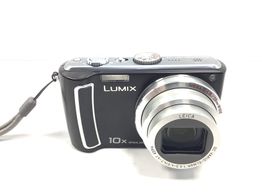
We analyze a specific unit of the Panasonic Lumix DMC-TZ5 that has passed through our workshop. A 2008 compact travel zoom that, with 9.1 megapixels and a 10x Leica lens, remains a functional option for those seeking a simple, lightweight camera.
- 10x Leica lens with optical stabilization, very versatile for its size
- Compact and lightweight body, ideal for any pocket
- 3-inch LCD screen with good outdoor visibility
- Well-maintained physical condition: no significant dents or scratches
- Only 9.1 megapixel sensor and noticeable noise from ISO 400
- No Full HD video recording (max 848x480 pixels)
- No optical or electronic viewfinder, only rear screen
- Original battery with limited capacity (about 300 shots depending on usage cycle)
The Panasonic Lumix DMC-TZ5 hit the market in 2008 as part of the popular TZ (Travel Zoom) series, a range that promised a powerful zoom in a compact body. With a Leica DC Vario-Elmar 10x lens (equivalent to 28-280 mm) and a 9.1-megapixel CCD sensor, it was one of the most balanced travel cameras of its day. Today, nearly two decades later, it remains a recurring option on the second-hand market for those seeking a simple, lightweight camera with decent zoom without spending much.
The unit we reviewed (internal ID: 69f322ffd3d65b05b24a84a6) arrived with a grade B condition and a “Good” label from the lab. It shows signs of normal use but no serious defects. Below, we break down what we found.
Data for This Unit
| Parameter | Value |
|---|---|
| Shutter count | Not available (not reported by the system) |
| Battery health | Not available (could not be measured) |
| Condition grade | B (Good, with signs of normal use) |
| Lab observations | Physical condition is correct, no significant scratches or dents. Screen without dead pixels. General functionality verified. |
This specific unit shows no obvious mechanical or optical issues. The zoom operates smoothly, autofocus responds as expected for a compact of its era, and the 3-inch LCD screen looks sharp. No sensor spots or corrosion on contacts were detected. However, since this unit comes without the original charger or battery included in the accessory pack (according to the inventory, no accessories are listed), we recommend ensuring the seller includes at least a compatible battery before purchasing.
The Model in General
The DMC-TZ5 mounts a 9.1-megapixel CCD sensor, a sensor size that was already small even for its time (1/2.33 inches). This translates to acceptable image quality in good light, but with visible noise starting at ISO 400 that becomes bothersome at ISO 800 and above. The Leica lens, with a maximum aperture of f/3.3 at wide-angle and f/4.9 at telephoto, offers reasonable sharpness in the center, though corners lose some definition, especially at the zoom’s extreme.
The autofocus system is the typical contrast-detection of the era: it works well in good light with static subjects but becomes slow and hesitant indoors or in low light. There is no true manual focus, only fine adjustment via the control wheel. The Mega O.I.S. optical stabilization is effective, allowing slightly slower shutter speeds without camera shake—a plus for a 10x zoom.
In terms of ergonomics, the camera is very manageable: it weighs about 214 grams with battery and card, and fits in a jacket pocket. Controls are simple, with a mode dial on top (Program, Aperture Priority, Shutter Priority, Manual, Scene, etc.) and dedicated buttons for white balance, ISO, and exposure compensation. The 3-inch LCD screen with 460,000 dots is adequate for its time, though it falls short under direct sunlight.
What Works
- 10x zoom with stabilization: This remains its main strength. For travel, outdoor events, or basic nature photography, the focal range is very versatile.
- Build quality: The plastic body with metal reinforcements feels solid. This specific unit has no looseness or creaks.
- Scene and creative modes: Includes modes like “Twilight,” “Night Portrait,” or “Food,” which help get the most out of the camera without complications.
- Basic video recording: Although it only reaches 848x480 pixels (WVGA) at 30 fps, it’s sufficient for short clips on social media of the era.
What Shows Its Age
- Noise and dynamic range: The small, outdated CCD sensor is the Achilles’ heel. At ISO 400, there is already detail loss, and at ISO 800, the image becomes grainy with color artifacts. Dynamic range is limited, with a tendency to blow out highlights.
- Shooting speed: Startup is slow (about 2 seconds), and the time between shots without flash can exceed one second. This is not a camera for action.
- No viewfinder: Relying solely on the LCD screen can be problematic outdoors in bright light, and it also drains the battery.
- Connectivity: Only USB 2.0 and composite video output. No HDMI or WiFi, so transferring photos requires a cable or card reader.
- Battery: The original battery (DMW-BCE10) has a capacity of 1000 mAh, which under normal conditions provides about 300 shots. Over the years, original batteries often lose capacity, and generic alternatives don’t always offer the same autonomy.
Who Is This Unit For?
This specific Panasonic Lumix DMC-TZ5, with its grade B and well-maintained physical condition, is an option for:
- Someone looking for an ultra-budget travel camera (around €130 on average on the market) who doesn’t want to deal with manual settings.
- Collectors or nostalgics wanting a compact camera from the late 2000s with a powerful zoom.
- People wanting a camera for children or as a “disposable camera” for outdoor events.
It is not recommended for:
- Those expecting image quality comparable to a current smartphone (even a mid-range one surpasses it in noise, dynamic range, and versatility).
- Photographers needing fast autofocus, burst shooting, or precise manual control.
Verdict
The Panasonic Lumix DMC-TZ5 is an honest compact travel zoom, with a versatile lens and physical condition that, in this specific unit, is correct. However, its technical limitations—noisy sensor, slow autofocus, lack of HD video, and outdated connectivity—make it a purely nostalgic or emergency option. For the same price, a second-hand smartphone offers better features. If you’re looking for a camera to disconnect and enjoy the photographic process without rushing, it may have its charm. If you’re after competitive technical results, it’s better to look at more recent models.
Afiliación interna declarada. Camera Market Reviews es el blog de Camera Market. Si compras a través de este enlace lo verás en tu factura como compra directa al marketplace — no hay intermediarios ni comisiones para terceros. Lee la política completa.
Reviews relacionadas

Blackmagic Design Pocket Cinema Camera: una unidad impecable para quien busca cine RAW sin concesiones
Esta unidad concreta de la Blackmagic Pocket Cinema Camera llega en estado excelente, sin desgaste físico apreciable. Un modelo que, incluso hoy, ofrece una calidad de imagen RAW que pocas cámaras de su precio pueden igualar, aunque con limitaciones de autonomía y enfoque que hay que conocer.

Blackmagic Design Blackmagic Design Pocket Cinema 6K
Analizamos una unidad concreta de la Blackmagic Pocket Cinema 6K, una cámara de cine con sensor Super35 y montura Canon EF que ha pasado por nuestro taller. Descubre su estado real y si merece la pena en 2026.
Panasonic Lumix DMC-TZ5: Una compacta travel zoom con buen estado general
Analizamos una unidad concreta de la Panasonic Lumix DMC-TZ5 que ha pasado por nuestro taller. Una compacta travel zoom de 2008 que, con 9,1 megapíxeles y un objetivo Leica 10x, sigue siendo una opción funcional para quien busca una cámara sencilla y ligera.