Canon EOS 1D Mark II N
A 2005 unit in excellent condition, with everything that implies


We review a second-hand Canon EOS 1D Mark II N that has passed through our workshop. A 2005 professional body, 8 MP, and a specific grade B unit that arrives in excellent condition.
- Sealed professional body, built to last decades
- Specific unit in excellent condition according to our workshop
- Restrained price for a 1D-series body
- 8 MP and APS-H sensor: unusual resolution and format today
- No video, small screen and menus from another era
- Considerable weight and bulk compared with any current camera
The Canon EOS 1D Mark II N is a camera that should be placed in context before we talk about it. It was introduced in 2005 as a revision of the 1D Mark II, within Canon’s professional range for photojournalism and sport. We are talking about a DSLR body with an 8-megapixel APS-H sensor, 8.5 fps burst and a 45-point autofocus system that, at the time, was the benchmark in its category. It is not a camera for everyone, and it does not pretend to be.
What we have in the workshop today is not just any 1D Mark II N: it is a specific unit that has passed through our verification process and arrives with a grade B, but with a lab report that places it in excellent physical condition. In other words, the overall classification is conservative, while the specific workshop observations are good. Let’s go through exactly what we have seen and what can be expected from it.
Data for this unit
| Item | Value |
|---|---|
| Shutter count | Not available |
| Battery health | Not available |
| Condition grade | B |
| Lab observations | Excellent physical condition |
| Accessories included | Not specified |
We should be transparent about what we do not have. On this unit we have not been able to record the number of actuations or the battery condition, which is common in bodies of this generation whose counters are not always accessible with current tools. What the report does confirm is that the physical condition is excellent, which, in a 2005 camera, is a relevant fact: most units in circulation have passed through professional hands and carry marks of intensive use.
The model in general
The 1D Mark II N mounts an 8.2-megapixel APS-H CMOS sensor, an intermediate format between APS-C and full frame that Canon abandoned years later. That 1.3x crop factor conditions the entire choice of lenses and it is worth being clear about that before considering a purchase. The DIGIC II processor and the 45-point autofocus system (with 19 cross-type points) were the professional standard of their time, and even today they respond capably in good light.
In terms of ergonomics, the 1D series is a world apart: sealed body, integrated grip, dual SD and CF card slots, and a weight of around 1,200 grams without a lens. It is not a camera to carry around all day for pleasure, but to work with. The 2.5-inch, 230,000-dot rear screen falls short for checking focus precisely, and the menus follow a logic from two decades ago. No video, of course.
What works
The first thing that stands out when picking up this specific unit is the sense of solidity. The body shows no play, the dials turn with the expected firmness and the sealing appears intact at first glance. On a model with twenty years behind it, that is no small thing. The autofocus system, when given enough light, is still fast and accurate, and the 8.5 fps burst remains useful for sport or wildlife if you accept the buffer limit.
The sensor’s performance at low ISO is correct for the era, with a dynamic range that does not embarrass itself when compared with other DSLRs of its generation. And the price of this unit, 289 euros, is in line with the market average of the last 30 days, which says quite a lot about the stability of this model on the second-hand market.
What weighs heavily with the years
We are not going to hide the obvious: 8 megapixels is little by current standards, and the APS-H format limits the use of full-frame lenses without cropping. The screen is small and low-resolution, which complicates reviewing in the field. There is no video, no wireless connectivity and the original USB port requires adapters to work with modern equipment. The battery, moreover, is a specific format that is no longer manufactured, so it is worth making sure the unit includes at least one in working condition.
Add to that the weight and bulk, which become noticeable in prolonged use. And the noise at high ISOs, although acceptable for 2005, is far from what is expected today even in entry-level cameras.
Who is this unit for?
This specific 1D Mark II N makes sense for three profiles. The first, the collector or enthusiast of the golden age of the DSLR who wants a professional body in good condition without paying cult prices. The second, the photographer looking for a robust second camera for harsh conditions who does not need more than 8 MP. The third, anyone who wants to get started with the 1D series with a verified unit and a workshop report.
We do not recommend it as a main camera for anyone working with current demands for resolution, video or connectivity. Nor for anyone unwilling to take on the battery and accessory ecosystem of a 2005 camera.
Verdict
A flawless unit of a camera that no longer competes on specifications, but that still makes sense for anyone looking for a professional body from the golden age of the DSLR. The grade B is conservative: the actual physical condition is excellent, and that, in a model with two decades of history, is the strongest argument in its favour.
Afiliación interna declarada. Camera Market Reviews es el blog de Camera Market. Si compras a través de este enlace lo verás en tu factura como compra directa al marketplace — no hay intermediarios ni comisiones para terceros. Lee la política completa.
Reviews relacionadas

Blackmagic Design Pocket Cinema Camera: una unidad impecable para quien busca cine RAW sin concesiones
Esta unidad concreta de la Blackmagic Pocket Cinema Camera llega en estado excelente, sin desgaste físico apreciable. Un modelo que, incluso hoy, ofrece una calidad de imagen RAW que pocas cámaras de su precio pueden igualar, aunque con limitaciones de autonomía y enfoque que hay que conocer.

Blackmagic Design Blackmagic Design Pocket Cinema 6K
Analizamos una unidad concreta de la Blackmagic Pocket Cinema 6K, una cámara de cine con sensor Super35 y montura Canon EF que ha pasado por nuestro taller. Descubre su estado real y si merece la pena en 2026.
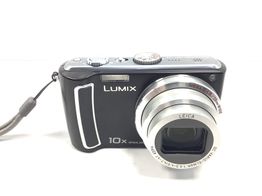
Panasonic Lumix DMC-TZ5: Una compacta travel zoom con buen estado general
Analizamos una unidad concreta de la Panasonic Lumix DMC-TZ5 que ha pasado por nuestro taller. Una compacta travel zoom de 2008 que, con 9,1 megapíxeles y un objetivo Leica 10x, sigue siendo una opción funcional para quien busca una cámara sencilla y ligera.