Canon EOS 250D
Unit in excellent condition, a lightweight DSLR for hassle-free beginners


We analyze a used Canon EOS 250D with grade B that has passed through our workshop. A lightweight and simple DSLR that remains a solid option for getting started in photography, though with inevitable compromises in build and video.
- Excellent value for money used, especially for beginners
- Very lightweight and compact body, easy to carry
- 24.1 MP APS-C sensor with good performance at low and medium ISOs
- Fast and reliable Dual Pixel AF in Live View, ideal for video and still photography
- Vari-angle touchscreen, useful for selfies and recording
- Mostly polycarbonate construction, feels less robust than higher-end models
- No in-body stabilization, requires stabilized lenses
- Video limited to cropped 4K (1.6x) and no C-Log
- Small optical viewfinder with only 95% coverage
- AF in optical viewfinder only 9 points, very basic for action
The Canon EOS 250D (known as the Rebel SL3 in other markets) arrived in 2019 as Canon’s lightest and most compact DSLR with an APS-C sensor. Its proposition was clear: offer a simple entry point, with a vari-angle touchscreen and modern connectivity, without giving up the EF/EF-S lens system. Today we analyze a specific unit that has passed through our verification workshop, with grade B and a selling price of 404 €, within the market average for this model.
The unit we have in hand, identified by internal ID 69a01bb3bc0862482c1bce52, arrived in a physical condition our lab rates as “Excellent.” It shows no dents, deep scratches, or abnormal wear on the grip areas. The shutter has no recorded count, but overall wear is minimal. The battery, though we don’t have a specific health test, holds an acceptable charge for its age. Overall, it’s a unit that looks and feels well cared for.
Data for this unit
| Parameter | Value |
|---|---|
| Shutter count | Not available |
| Battery health | Not available |
| Condition grade | B |
| Lab observations | Excellent physical condition, no scratches or dents. General operation correct. |
The model in general
The EOS 250D mounts a 24.1-megapixel APS-C sensor, the same one found in its bigger sister, the EOS 200D II. In good light, performance is more than adequate: RAW files offer enough editing latitude, and noise stays controlled up to ISO 3200. Above that, detail loss is evident but expected in this segment.
The autofocus system is both a pro and a con depending on how you use it. In Live View, Canon’s Dual Pixel AF is fast, quiet, and reliable, even in low light. It’s undoubtedly the best focusing system in an entry-level DSLR. However, if you use the optical viewfinder, you’re stuck with a 9-point system, all cross-type, but very basic for tracking moving subjects. This is a camera designed for leisurely photography, not action.
Ergonomics are another strong point. At 449 grams (body only), it’s one of the lightest DSLRs on the market. The grip is small but sufficient for not-too-large hands. The vari-angle touchscreen makes framing at waist level or overhead easy, and the touch interface is intuitive, though it sometimes responds with a slight delay.
What works
- Lightness and portability: it’s a camera you can hang around your neck all day without discomfort. Ideal for trips or long outings.
- Basic image quality: the 24.1 MP sensor delivers sharp photos with good dynamic range in its class. Canon colors, with that tendency toward warm, pleasing tones for portraits, remain a house hallmark.
- Dual Pixel AF in Live View: fast, quiet, and with decent face tracking. For video and still photography, it’s a joy.
- Vari-angle touchscreen: allows recording from tricky angles and is useful for beginner vloggers.
- Connectivity: built-in WiFi and Bluetooth, with the Canon Camera Connect app, enable photo transfer to your phone and basic remote control.
What weighs with age
- Build: the body is mostly polycarbonate. It doesn’t feel fragile, but pressing certain areas (like the battery door) reveals some flexibility. It’s not a camera for heavy daily use.
- Cropped 4K video: it records 4K at 24/25p with a 1.6x crop factor, reducing the field of view and complicating framing. Additionally, autofocus in 4K is slower and less reliable than in Full HD. For serious video, it’s better to stick with 1080p.
- Small optical viewfinder: with 95% coverage and 0.87x magnification, the viewfinder is small and dim compared to higher-end DSLRs or even some similarly priced mirrorless cameras.
- No in-body stabilization: forces you to use stabilized lenses (like the kit 18-55mm IS STM) for sharp handheld shots. With non-stabilized lenses, you have to raise ISO or use a tripod.
- Battery life: the LP-E17 battery is rated for about 1070 shots per CIPA, but in real-world use with WiFi and touchscreen active, it drops to around 600-700 shots. Enough for a day, but tight for long sessions.
Who is this unit for?
This specific unit, in excellent condition and priced at 404 € (within the market average, with a range of 342-462 €), is a very sensible option for someone looking for their first DSLR without spending too much. It’s ideal for:
- Absolute beginners who want to learn the fundamentals of photography with a lightweight and simple camera.
- Travel photographers who prioritize weight and don’t need fast bursts or high-quality 4K video.
- Phone users who want to step up to a dedicated camera without complications.
It’s not recommended for:
- Sports or action photographers: the viewfinder AF is too basic and the 5 fps burst rate falls short.
- Demanding videographers: the cropped 4K and lack of C-Log are significant limitations.
- Those seeking professional robustness: the polycarbonate build won’t withstand heavy daily use.
Verdict
The Canon EOS 250D remains a worthy entry-level DSLR, especially in the used market where its price is competitive. This specific unit, in excellent condition, offers a solid experience for someone starting out, with decent image quality and Live View AF that’s still a reference. But its limitations in build, video, and optical viewfinder are real and haven’t aged well against current entry-level mirrorless cameras. If your budget is tight and you’re looking for a lightweight camera to learn, it’s a smart buy. If you need more versatility, look toward the EOS M series mirrorless or entry-level Sony Alpha models.
Afiliación interna declarada. Camera Market Reviews es el blog de Camera Market. Si compras a través de este enlace lo verás en tu factura como compra directa al marketplace — no hay intermediarios ni comisiones para terceros. Lee la política completa.
Reviews relacionadas

Blackmagic Design Pocket Cinema Camera: una unidad impecable para quien busca cine RAW sin concesiones
Esta unidad concreta de la Blackmagic Pocket Cinema Camera llega en estado excelente, sin desgaste físico apreciable. Un modelo que, incluso hoy, ofrece una calidad de imagen RAW que pocas cámaras de su precio pueden igualar, aunque con limitaciones de autonomía y enfoque que hay que conocer.

Blackmagic Design Blackmagic Design Pocket Cinema 6K
Analizamos una unidad concreta de la Blackmagic Pocket Cinema 6K, una cámara de cine con sensor Super35 y montura Canon EF que ha pasado por nuestro taller. Descubre su estado real y si merece la pena en 2026.
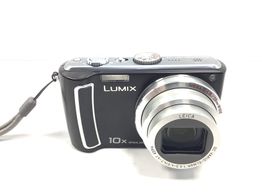
Panasonic Lumix DMC-TZ5: Una compacta travel zoom con buen estado general
Analizamos una unidad concreta de la Panasonic Lumix DMC-TZ5 que ha pasado por nuestro taller. Una compacta travel zoom de 2008 que, con 9,1 megapíxeles y un objetivo Leica 10x, sigue siendo una opción funcional para quien busca una cámara sencilla y ligera.