Canon EOS 700D: The entry-level DSLR that still delivers in 2026
A flawless unit of the DSLR that democratised DSLR video


We review a Canon EOS 700D in excellent condition that has passed through our workshop. The entry-level DSLR that marked a turning point in DSLR video remains a sensible option on the second-hand market.
- Excellent physical condition for a camera of this age
- Articulated touchscreen, uncommon in its class
- Dual microphone and decent H.264 recording for getting started in video
- Competitive price versus the market average
- 18 MP sensor that is starting to show its age against modern alternatives
- 9-point AF very limited compared with current systems
- No in-body stabilisation
- Video tops out at 1080p at 30 fps
When a camera has been on the market for over a decade, it usually falls into one of two extremes: it either becomes a museum piece or a sensible opportunity for someone looking to get into a system without breaking the bank. The Canon EOS 700D clearly belongs to the second group, and the unit we have in the workshop today proves it.
This Canon DSLR, originally launched in 2013, was the logical evolution of the 650D and the first in its entry-level range to incorporate the DIGIC 5 processor. Its big selling point back then was hybrid autofocus in video and the articulated touchscreen — something we now take for granted but which was a major leap forward at the time. The unit we have verified matches identifier 69c750ac37b275108639db2e and arrives with a grade B on our scale, although laboratory observations place it in “Excellent” condition in terms of physical integrity.
Details of this unit
| Metric | Value |
|---|---|
| Shutter count | Not available |
| Battery health | Not available |
| Condition grade | B |
| Laboratory observations | Physical condition: Excellent |
| Overall condition | Excellent |
| Selling price | €219 |
| Market average price (30 days) | €205 |
| Units available on the market | 6 |
The lack of shutter and battery data is common in bodies of this generation, where Canon did not record actuations in a user-accessible way. What we can confirm is that this unit has arrived in remarkable physical condition, with no knocks or significant wear on the polycarbonate body. This is a camera that has clearly had a quiet life, probably owned by an enthusiast who used it at weekends and stored it with care.
The model in general
The 700D mounts an 18-megapixel APS-C sensor, the same one we already saw in the 650D and which Canon stretched all the way to the 750D. In its day, this sensor offered competitive performance, with a usable ISO range up to 1600-3200 with some chromatic noise in the shadows. Today, compared with the BSI and stacked sensors of modern mirrorless cameras, its age shows: there is less dynamic range and exposure latitude is tighter.
The AF system is another area where time has taken its toll. Nine points with a central cross-type sensor respond competently in good light, but in low-contrast scenes or dim lighting you are forced to fall back on manual focus. It is not a bad system, but any current entry-level mirrorless leaves it behind by several laps in terms of coverage and reliability.
Ergonomics, however, remain a strong point. The grip is comfortable, the dials are well placed, and the articulated touchscreen — something Canon has not fitted to all its DSLRs — makes work in awkward angles much easier. The optical viewfinder, though small, is honest and lag-free.
What works
The touchscreen is arguably this camera’s biggest asset. Being able to touch to focus and shoot in Live View, or navigate the menus with gestures, is something many DSLR users of that era did not have. The full articulation allows selfies and basic vlogging, which in 2013 was almost revolutionary.
Video, with its dual microphone and H.264 recording, remains decent for casual content. Do not expect 4K or flat colour profiles, but for anyone wanting to learn the fundamentals of exposure and visual storytelling, it is more than enough. The 30 fps limit at 1080p is noticeable if you are coming from a modern smartphone, but for beginner video it does the job.
Canon’s menu system, with its colour-coded tab structure, remains one of the most intuitive on the market. For someone coming from a smartphone who wants to understand what aperture priority or exposure compensation means, this camera is an excellent school.
What weighs it down over the years
The 18 MP sensor is the first drawback. Not because it is bad, but because any modern entry-level camera — even a mid-range smartphone — offers more resolution and better high-ISO performance. If your main use will be indoor or low-light photography, this camera will demand a fast lens and a steady hand.
The 9-point AF is the second serious limitation. When tracking moving subjects, especially children or pets, the camera loses focus easily. AI Servo mode exists, but its accuracy is limited. For static or posed photography it works; for action it is frustrating.
The lack of in-body stabilisation means you depend on stabilised lenses (Canon’s IS models) or a surgeon’s steady hand. This makes the system more expensive if you want sharp results in challenging conditions.
And one detail many forget: the 700D uses LP-E8 batteries, which lose capacity over the years. We have not been able to verify the battery health on this unit, but it is worth bearing in mind: you will probably need a spare battery, and original ones are no longer manufactured.
Who is this unit for?
This specific unit, in excellent condition and at €219, is aimed at three very specific profiles. The first is the photography student who wants to learn on a classic DSLR system, with an optical viewfinder and physical controls, without spending a fortune. The second is the user who already owns Canon EF lenses and wants a backup or travel body without worrying about it getting damaged. The third is the nostalgic who wants to relive the experience of shooting with a DSLR from Canon’s golden era.
It is not a camera for anyone seeking modern performance, nor for anyone wanting to do serious video, nor for anyone needing reliable AF for action. For those cases, there are better options even on the second-hand market, such as a Sony A6000 or a Canon M50.
Verdict
The Canon EOS 700D is a camera that has aged with dignity but without glory. This specific unit, in excellent condition and at a fair price (€219 versus the €205 average), is a reasonable purchase for anyone wanting to get started in the EF system with a camera that offers no surprises. Its limitations are well known and acceptable if you know what you are getting into: an 18 MP sensor with limited ISO, a basic 9-point AF system and 1080p video at 30 fps.
What it does offer is an honest learning experience, an articulated touchscreen that makes composition easier, and a robust body that will withstand years of use. If your budget is tight and your photographic ambition lies in learning the fundamentals, this 700D is a loyal companion. If you are after modern performance, keep looking.
Afiliación interna declarada. Camera Market Reviews es el blog de Camera Market. Si compras a través de este enlace lo verás en tu factura como compra directa al marketplace — no hay intermediarios ni comisiones para terceros. Lee la política completa.
Reviews relacionadas

Blackmagic Design Pocket Cinema Camera: una unidad impecable para quien busca cine RAW sin concesiones
Esta unidad concreta de la Blackmagic Pocket Cinema Camera llega en estado excelente, sin desgaste físico apreciable. Un modelo que, incluso hoy, ofrece una calidad de imagen RAW que pocas cámaras de su precio pueden igualar, aunque con limitaciones de autonomía y enfoque que hay que conocer.

Blackmagic Design Blackmagic Design Pocket Cinema 6K
Analizamos una unidad concreta de la Blackmagic Pocket Cinema 6K, una cámara de cine con sensor Super35 y montura Canon EF que ha pasado por nuestro taller. Descubre su estado real y si merece la pena en 2026.
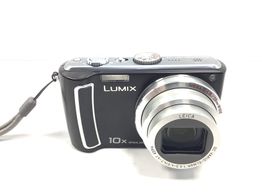
Panasonic Lumix DMC-TZ5: Una compacta travel zoom con buen estado general
Analizamos una unidad concreta de la Panasonic Lumix DMC-TZ5 que ha pasado por nuestro taller. Una compacta travel zoom de 2008 que, con 9,1 megapíxeles y un objetivo Leica 10x, sigue siendo una opción funcional para quien busca una cámara sencilla y ligera.