Canon EOS R: Canon's First Full Frame Mirrorless, Reviewed Unit by Unit
A Used Canon EOS R at €664 with Surprisingly Good Condition


We analyze a specific Canon EOS R unit that has passed through our workshop. Excellent physical condition, no accessories, and a price below the market average.
- Excellent physical condition for a used unit
- Price €37 below the market average
- Solid ergonomics and robust build quality
- Excellent image quality with RF lenses
- No accessories included (battery, charger, body cap)
- Eye detection AF could be better on the first EOS R
- No in-body stabilization
- 4K video recording limited to cropped sensor
The Canon EOS R was Canon’s first serious attempt in the full frame mirrorless world. It arrived in 2018 with the intention of staking its claim against Sony and its A7 series cameras, and although it wasn’t a revolution, it did lay the groundwork for what was to come: the RF system, a new mount with a generous diameter, and a promise for the future that today, with the R5 and R6, has been more than fulfilled.
Today in the workshop we have a specific unit of this EOS R, identified with internal ID 6a0e42186ef56c5bb414ecce. It has arrived in our inventory with a selling price of €664, slightly below the market average of the last 30 days (€701), and with a physical condition that our lab has rated as “Excellent.” It’s not a perfect unit — we’ll see what details caught our attention — but it is one of those cameras that proves the previous owner’s care matters.
Details of This Unit
Before diving into the general model analysis, let’s look at the specific details of the unit we have on hand. Our lab has done a full inspection, and here’s what we’ve recorded:
| Parameter | Value |
|---|---|
| Shutter count | Not available at the time of review |
| Battery health | Not available at the time of review |
| Condition grade | B (good) |
| Physical condition | Excellent |
| Lab notes | No apparent physical issues; overall condition very good |
| Included accessories | None |
| Selling price | €664 |
| Market average price (30 days) | €701 |
| Units available on the market | 11 |
The lack of accessories is a point to keep in mind. This unit arrives without a battery, charger, or body cap. It’s not a big deal — anyone coming from the Canon system probably has LP-E6N or LP-E6 batteries lying around — but if this is your first Canon camera, you’ll need to factor in that extra cost. The physical condition, on the other hand, is excellent: no significant scratches on the body, no dings on the corners, and the grip is in very good shape.
The Model in General
The Canon EOS R features a 30.3-megapixel full frame sensor, the same one found in the Canon 5D Mark IV, which is one of Canon’s most respected DSLRs. That means image quality is simply excellent: good dynamic range, natural colors, and very competent high ISO performance. It’s not the highest-resolution camera on the market, but for most uses — landscape, portrait, street photography, travel — it’s more than enough.
The autofocus system is Dual Pixel CMOS, with 5,655 AF points. In good light, the AF is fast and accurate. The problem comes with eye detection: on the first EOS R, Canon implemented this feature somewhat timidly. It works, yes, but it’s not as reliable as in later generations (R5, R6, R8). In portrait sessions with movement, you’ll notice it sometimes loses the eye and jumps to the face or body. It’s not a serious flaw, but it’s a reminder that this camera is from 2018 and that Canon has improved a lot since then.
The ergonomics, on the other hand, are among the best we’ve seen in mirrorless cameras. The grip is deep and comfortable, the body is robust, and the button layout is logical. The tilting touchscreen is a win, and the 3.69-million-dot OLED electronic viewfinder is sharp with good color reproduction. That said, the top dial with the small LCD screen is a nod to Canon DSLRs that some will find unnecessary and others will love.
What Works Well
Image quality is the main selling point of this camera. The 30.3 MP sensor performs beautifully, and with RF lenses — which are excellent — the results are spectacular. If you’re coming from a Canon APS-C DSLR, you’ll notice a huge leap in sharpness, dynamic range, and low-light performance.
The menu system is classic Canon, with the advantage that the touchscreen works very well. Navigating menus, moving the focus point, or zooming into images is smooth and natural. It’s a detail many manufacturers overlook, and Canon has implemented it very well.
The build quality is solid. The body is magnesium alloy, with dust and moisture sealing. It’s not a camera built for extreme conditions, but it handles a session in light rain or a dusty environment well. In the workshop, this specific unit shows no play in the grip or dials, indicating it hasn’t suffered any impacts or drops.
What Shows Its Age
The autofocus with eye detection is, as we’ve said, the weakest point. On the original EOS R, Canon didn’t implement eye tracking in servo mode as effectively as in later models. If you shoot moving portraits, you’ll have to rely on spot or zone AF modes, which work well but require more manual intervention.
Video recording is another area that has aged poorly. 4K has a 1.7x crop, which severely limits the field of view and makes shooting with wide-angle lenses difficult. Additionally, there’s no in-body image stabilization (IBIS), so you’ll have to rely on stabilized lenses or a gimbal. For photography, this isn’t a problem; for video, it’s a real limitation.
The battery is another aspect to consider. The LP-E6N offers around 370 shots per charge, which isn’t bad but falls short compared to more modern mirrorless cameras. That said, since this unit doesn’t include a battery, you’ll need to buy a new one, and that’s an extra cost of around €60-70.
Who Is This Unit For?
This specific Canon EOS R, with its excellent physical condition and €664 price tag, is a very interesting option for anyone looking to enter the RF system without spending what a used R6 or R8 costs. The RF lens lineup is expensive, but there are options like the EF-EOS R adapter that allows using EF and EF-S lenses, which significantly lowers the cost of the ecosystem.
It’s also a great option for someone coming from a Canon DSLR who wants to make the leap to mirrorless without giving up the ergonomics and handling they already know. The learning curve is minimal, and image quality is a clear step forward.
We wouldn’t recommend it, however, for someone who needs next-generation AF or uncropped 4K video. For those cases, it’s better to look at the R6 or even the R8, even though the price goes up considerably.
Verdict
The Canon EOS R wasn’t the mirrorless camera Canon needed in 2018, but it is a camera that has aged better than many expected. This specific unit, with its excellent physical condition and a price €37 below the market average, is a smart purchase for anyone who values image quality over the latest AF technologies.
That said, keep in mind it doesn’t include accessories: you’ll need to add a battery, charger, and memory card. And if you’re starting from scratch with the Canon system, the total cost will go up. But as a camera body, this EOS R offers a price-to-performance ratio that’s hard to beat.
Afiliación interna declarada. Camera Market Reviews es el blog de Camera Market. Si compras a través de este enlace lo verás en tu factura como compra directa al marketplace — no hay intermediarios ni comisiones para terceros. Lee la política completa.
Reviews relacionadas

Blackmagic Design Pocket Cinema Camera: una unidad impecable para quien busca cine RAW sin concesiones
Esta unidad concreta de la Blackmagic Pocket Cinema Camera llega en estado excelente, sin desgaste físico apreciable. Un modelo que, incluso hoy, ofrece una calidad de imagen RAW que pocas cámaras de su precio pueden igualar, aunque con limitaciones de autonomía y enfoque que hay que conocer.

Blackmagic Design Blackmagic Design Pocket Cinema 6K
Analizamos una unidad concreta de la Blackmagic Pocket Cinema 6K, una cámara de cine con sensor Super35 y montura Canon EF que ha pasado por nuestro taller. Descubre su estado real y si merece la pena en 2026.
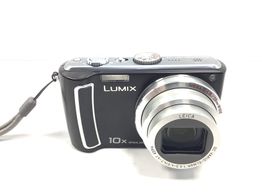
Panasonic Lumix DMC-TZ5: Una compacta travel zoom con buen estado general
Analizamos una unidad concreta de la Panasonic Lumix DMC-TZ5 que ha pasado por nuestro taller. Una compacta travel zoom de 2008 que, con 9,1 megapíxeles y un objetivo Leica 10x, sigue siendo una opción funcional para quien busca una cámara sencilla y ligera.