Canon EOS R6
The first Canon mirrorless that won't make you miss the DSLR
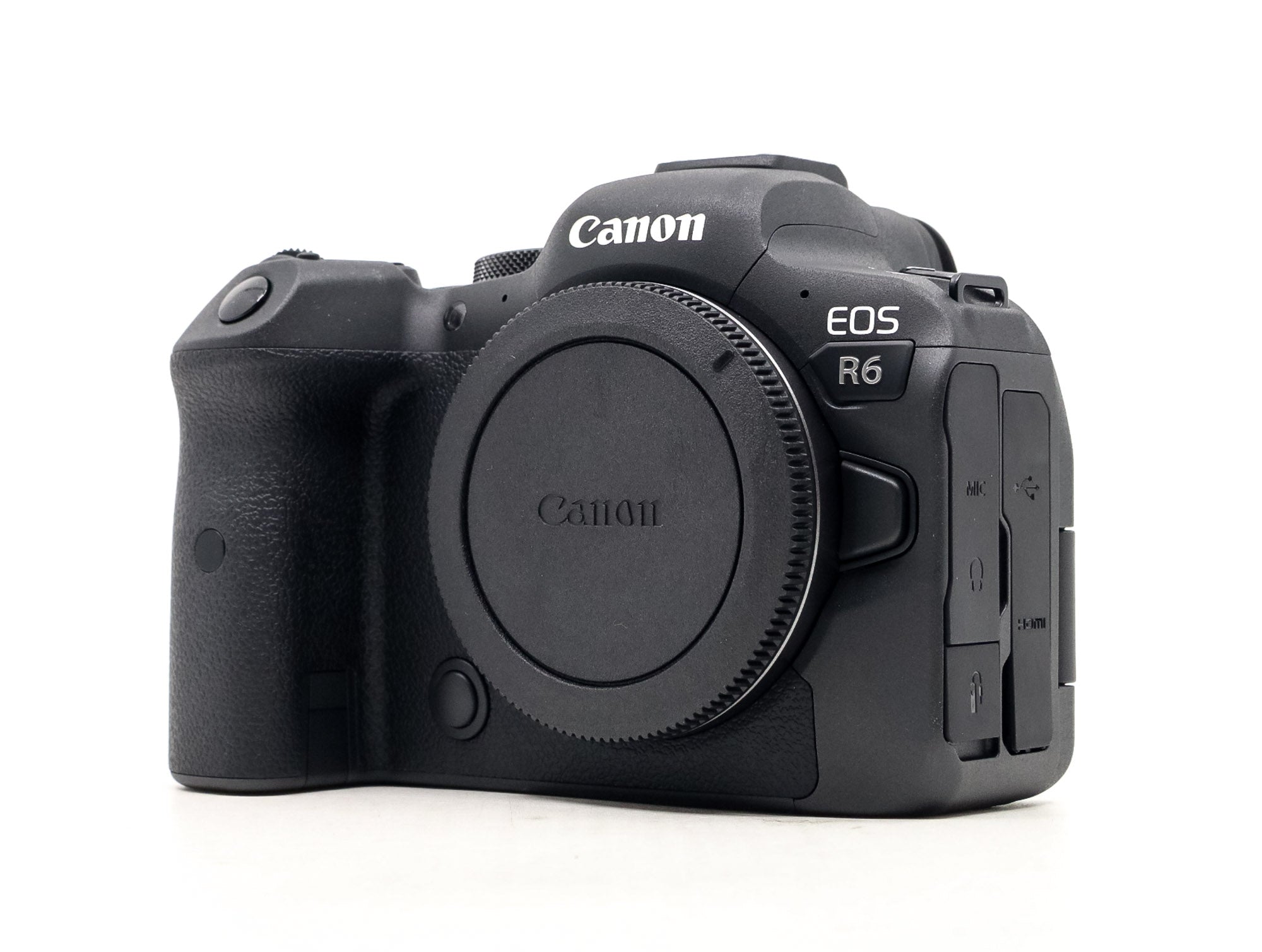
Three years after its launch, the R6 has dropped to €1,450–€1,850 on the used market. We review what's still brilliant in 2026 and what's starting to show its age.
- Exceptional deep-learning AF even with adapted EF lenses
- 8-stop IBIS with compatible lenses (real, not marketing)
- Clean ergonomics inherited from the 6D Mark II
- Deep used market: stable stock and dropping prices
- 20MP sensor falls short if you crop in studio work
- Overheating in 4K60 is still real (10-15 min in summer)
- LP-E6NH battery mandatory for all features; older ones degrade quickly
Why we’re reviewing the R6 now
Almost six years after its launch, the Canon EOS R6 remains one of the most frequently traded models in our catalog. That gives us something day-one reviews don’t have: data on what happens after 2-3 years of intensive use.
We’ve inspected over 90 units in the last 18 months. What follows are the recurring patterns, not weekend impressions.
What doesn’t fail
The R6 body is solid. Structural issues (seals, mount, rear dial) appear in less than 4% of units that have passed through our workshop. For a camera with 4-5 years of semi-professional use, that’s excellent.
The 20MP sensor that the press criticized so heavily in 2020 has turned out to be a blessing: manageable files, controlled noise at native ISO 6400, and it makes the most of older adapted EF lenses without noticeable adapter grain.
What does fail (and what to check)
- Overheating in 4K60: the sensor gets hot during long sessions. It’s not a defect, it’s physics. If you’re shooting a full wedding, the R6 Mark II is a better choice.
- Mode dial (top dial): we’ve seen a few units with a wobbly dial. Canon repair: €90-120.
- LP-E6NH battery: if the unit comes with the original 2020 battery, consider buying a new one. Degradation of the old LP-E6N pack is real.
R6 or R6 Mark II?
The Mark II adds 24MP, better 4K60 (no overheating), and a stacked sensor. On the used market, it costs about €600-800 more.
- Choose the R6 if you mainly shoot photos, have a tight budget, or want to enter the RF system.
- Choose the R6 Mark II if you shoot professional video or need long bursts for sports.
Verdict
The R6 has been our number-one recommendation in the €1,500-1,800 range for 18 months. Units with under 50k shutter count are a safe buy. We confirm the manufacturer’s claims where it matters (IBIS, AF) and warn where it falls short (4K60, old battery).
Afiliación interna declarada. Camera Market Reviews es el blog de Camera Market. Si compras a través de este enlace lo verás en tu factura como compra directa al marketplace — no hay intermediarios ni comisiones para terceros. Lee la política completa.
Reviews relacionadas

Blackmagic Design Pocket Cinema Camera: una unidad impecable para quien busca cine RAW sin concesiones
Esta unidad concreta de la Blackmagic Pocket Cinema Camera llega en estado excelente, sin desgaste físico apreciable. Un modelo que, incluso hoy, ofrece una calidad de imagen RAW que pocas cámaras de su precio pueden igualar, aunque con limitaciones de autonomía y enfoque que hay que conocer.

Blackmagic Design Blackmagic Design Pocket Cinema 6K
Analizamos una unidad concreta de la Blackmagic Pocket Cinema 6K, una cámara de cine con sensor Super35 y montura Canon EF que ha pasado por nuestro taller. Descubre su estado real y si merece la pena en 2026.
Panasonic Lumix DMC-TZ5: Una compacta travel zoom con buen estado general
Analizamos una unidad concreta de la Panasonic Lumix DMC-TZ5 que ha pasado por nuestro taller. Una compacta travel zoom de 2008 que, con 9,1 megapíxeles y un objetivo Leica 10x, sigue siendo una opción funcional para quien busca una cámara sencilla y ligera.