Fujifilm X-T1
The camera that defined Fujifilm's direction, now in excellent condition


A grade B X-T1 unit in excellent cosmetic shape, workshop-verified. We analyse what the model that changed Fujifilm's trajectory still offers and which limitations you should accept.
- Excellent cosmetic condition for its age
- Ergonomics and manual controls that remain a benchmark
- Restrained price within the current market range
- 16 MP sensor with limitations at high ISOs
- Autofocus clearly surpassed by later generations
The Fujifilm X-T1 is one of those cameras that mark a before and after in a brand’s history. Launched in 2014, it was Fujifilm’s first mirrorless camera with a design clearly inspired by the company’s analogue SLRs, with physical shutter speed, ISO and exposure compensation dials. It wasn’t just a camera: it was the statement of intent that consolidated the X series as a benchmark within mirrorless APS-C.
Today we bring to the table a specific unit that has passed through our verification workshop. We’re not talking about the model in the abstract, but about a specific X-T1 that is part of our inventory, with its condition history and its particularities. The grade assigned is B, although the lab’s physical observations point to excellent condition. That apparent contradiction deserves an explanation: the B grade responds to internal classification criteria, not to any relevant visible deterioration.
This unit arrived without documented additional accessories and without shutter count data or battery health recorded in the lab. That is, we evaluate what we can evaluate: cosmetic appearance, general operation and the model’s expected behaviour. With those cards on the table, let’s analyse it honestly.
Data for this unit
| Parameter | Value |
|---|---|
| Shutter count | Not recorded |
| Battery health | Not recorded |
| Condition grade | B |
| Lab observations | Excellent (cosmetic condition) |
| Accessories included | Not documented |
| Sale price | €454 |
| Average market price (30 days) | €447 |
The absence of shutter and battery data is common in cameras of this generation, which don’t always expose that information in an accessible way. What we can confirm is that the cosmetic condition has been rated as excellent by our team, and that the sale price sits slightly above the average market price of the last 30 days, with only two units available on the circuit at the time of writing this review.
The model in general
The X-T1 mounts a 16-megapixel X-Trans CMOS II sensor in APS-C format. It’s the same type of sensor Fujifilm had been refining since the X-Pro1, and its performance remains respectable in good light. Dynamic range is remarkable for its time, and RAW files retain recovery latitude in shadows if exposed carefully.
The autofocus system is, bluntly, where the passage of time shows most. The X-T1 uses a hybrid system with contrast and phase detection, but its coverage and speed are far from what even today’s entry-level mirrorless cameras offer. For unhurried portraiture, landscape or street with pre-focus, it works. For action or continuous tracking, it’s not the right tool.
Ergonomics, on the other hand, remain one of its great arguments. The shutter speed and compensation dials are where the hand expects them, the electronic viewfinder was pioneering at the time and the sealed body (with the optional grip) offers a sense of solidity that many modern cameras at a similar price don’t match. The grip is improvable with bulky lenses, but with Fujifilm’s compact primes the camera feels balanced.
What works
The cosmetic condition of this specific unit is its best card. It shows no visible knocks, the paint is well preserved and the dials turn with the expected firmness. On a camera more than a decade old, that’s not anecdotal: many X-T1s circulating on the second-hand market show wear on the body rubber or the port covers.
Sensor performance remains valid up to ISO 3200 with careful processing. Fujifilm’s SOOC colours, with their film simulations, continue to be one of the reasons people buy these cameras today. And the price, within the market range, positions it as a reasonable entry option into the X system, with access to a lens catalogue that has never stopped growing.
What weighs heavily with the years
Autofocus is the most obvious limitation. Anyone coming from a recent camera will notice the difference immediately, especially in low light or with moving subjects. The menu system also feels archaic compared to later generations, and the absence of modern connectivity (limited Wi-Fi, no Bluetooth) complicates file transfer.
Video is another weak point. The X-T1 records in 1080p at 60 fps, with no 4K recording options or logarithmic profiles. For anyone who needs current video capabilities, this camera is not the answer.
At the unit level, the lack of shutter and battery data introduces an uncertainty worth bearing in mind. It’s not a defect, but it is an informational limitation the buyer must accept.
Who is this unit for?
This X-T1 is intended for someone looking for a camera with character, manual controls and a restrained entry price into the Fujifilm system. It’s suitable for street photography, unhurried portraiture, landscape and personal projects where speed isn’t critical.
It’s not the camera for anyone who needs fast autofocus, modern video or advanced connectivity. Nor for anyone who wants a unit with a fully documented usage history: in this case, the excellent cosmetic condition is the main guarantee, but there is no shutter record.
Verdict
A well-kept X-T1 still makes sense in 2026 for a specific profile of photographer: someone who values the experience of use above specifications, who works at an unhurried pace and who wants to enter the Fujifilm system without spending a high figure. This specific unit, with excellent cosmetic condition and a price aligned with the market, meets those requirements. The model’s limitations are well known and we won’t gloss over them: slow autofocus, obsolete video and outdated menus. If you can live with them, it’s a coherent purchase. If not, there are more recent options for a similar outlay.
Afiliación interna declarada. Camera Market Reviews es el blog de Camera Market. Si compras a través de este enlace lo verás en tu factura como compra directa al marketplace — no hay intermediarios ni comisiones para terceros. Lee la política completa.
Reviews relacionadas

Blackmagic Design Pocket Cinema Camera: una unidad impecable para quien busca cine RAW sin concesiones
Esta unidad concreta de la Blackmagic Pocket Cinema Camera llega en estado excelente, sin desgaste físico apreciable. Un modelo que, incluso hoy, ofrece una calidad de imagen RAW que pocas cámaras de su precio pueden igualar, aunque con limitaciones de autonomía y enfoque que hay que conocer.

Blackmagic Design Blackmagic Design Pocket Cinema 6K
Analizamos una unidad concreta de la Blackmagic Pocket Cinema 6K, una cámara de cine con sensor Super35 y montura Canon EF que ha pasado por nuestro taller. Descubre su estado real y si merece la pena en 2026.
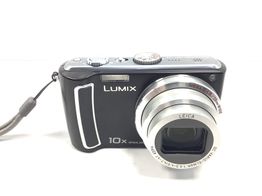
Panasonic Lumix DMC-TZ5: Una compacta travel zoom con buen estado general
Analizamos una unidad concreta de la Panasonic Lumix DMC-TZ5 que ha pasado por nuestro taller. Una compacta travel zoom de 2008 que, con 9,1 megapíxeles y un objetivo Leica 10x, sigue siendo una opción funcional para quien busca una cámara sencilla y ligera.