Fujifilm X20
A premium compact with an optical viewfinder that still makes sense in 2026


We review a specific Fujifilm X20 unit that has passed through our workshop. X-Trans II sensor, hybrid optical viewfinder and excellent condition despite its age.
- Hybrid optical viewfinder with superimposed information, rare in compacts
- X-Trans II sensor with good colour reproduction and pleasant grain
- Solid build and well-executed manual controls
- 2/3" sensor with visible noise from ISO 800
- Slow autofocus compared to current compacts
- No modern connectivity or articulating screen
The Fujifilm X20 is one of those cameras that Fujifilm stopped making but that never quite disappeared from enthusiasts’ imagination. Launched as an evolution of the X10, it keeps the premium compact formula with a hybrid optical viewfinder, a 2/3-inch X-Trans II sensor and a manual zoom lens of 28-112 mm equivalent with an f/2.0-2.8 aperture. It is not a camera for everyone, but those who seek it out know exactly why.
The unit we are reviewing today arrived at our verification workshop with a B grade and an observation of excellent physical condition. It is a camera that has passed through the hands of at least one previous owner, but it is preserved in remarkable condition for its age. No accessories are included in the lot, which is common for second-hand units in this segment.
Data for this unit
| Parameter | Value |
|---|---|
| Shutter count | Not available |
| Battery health | Not available |
| Condition grade | B |
| Lab observations | Excellent physical condition |
| Accessories included | None |
The absence of shutter and battery data is common in cameras of this generation, which do not expose that information in an accessible way. What we can confirm is that the physical condition of the unit is excellent according to our inspection: no visible impacts, no deep marks on the body and with the lens and screen in normal use condition.
The model in general
The X20 mounts a 2/3-inch X-Trans II sensor, the same format Fujifilm used in the X10 and later abandoned in favour of 1-inch sensors in the X30. We are talking about a small sensor, with everything that implies: generous depth of field, but also noise that appears earlier than one would like. At ISO 400 things hold up well; from ISO 800 the grain becomes evident, although with a character that many find pleasant.
The hybrid optical viewfinder is the hallmark of this series. It combines a real optical viewfinder with a superimposed digital information layer that shows exposure, focus and framing data. It is a solution Fujifilm perfected in its X100 and that in the X20 works capably, although with limited coverage and without the precision of a modern electronic viewfinder.
The autofocus system is where the passage of time shows most. It is contrast-detection, without phase detection, and in low light it takes a while to find the point. For calm, street or travel photography, it delivers. For action or moving subjects, it falls short.
What works
The lens is one of the strong points. A 28-112 mm equivalent with f/2.0 at the shortest focal length allows you to work in moderate light conditions without pushing the ISO. The build is solid, with a manual zoom ring and a focus ring that feel good to the touch. It is not an interchangeable lens, but it is well executed.
The manual controls are another argument in its favour. The X20 has a shutter speed dial, an exposure compensation dial and a configuration that invites you to shoot in manual or semi-automatic mode. For those coming from cameras with labyrinthine menus, this is a breath of fresh air.
Fujifilm’s colour reproduction, even on this small sensor, maintains that character the brand has cultivated for years. The film simulation modes, although limited in this generation, are still useful for those who shoot in JPEG.
What weighs on it with the years
The 2/3-inch sensor is the most obvious limitation. In 2026, with 1-inch compacts and phones with increasingly larger sensors, the X20’s advantage has shrunk. It is not a camera for large enlargements or for demanding light conditions.
The slow autofocus is another burden. Compared to any current camera, even mid-range compacts, the X20 feels slow. It is not a problem for unhurried photography, but it is for those expecting agile response.
Connectivity is practically non-existent. There is no WiFi, no Bluetooth, no wireless transfer. To move photos to your phone you have to resort to a card reader. It is a detail that in 2026 can be inconvenient, although it is also true that many users of this camera value precisely that disconnection.
The screen is not articulating and has a modest resolution. It is not a serious problem, but it limits use at awkward angles.
Who is this unit for?
This specific X20, with a B grade and excellent physical condition, is aimed at a very specific profile. It is not for those looking for the fastest camera or the best image quality per euro. It is for those who want a compact with an optical viewfinder, manual controls and a photographic process that invites you to think before shooting.
It can also make sense for collectors or fans of Fujifilm’s premium compacts who want a unit in good condition without paying new-camera prices. The fact that it does not include accessories is a point to bear in mind, but it also partly explains the price.
We would not recommend it as a sole camera for someone starting out in photography and wanting to cover all kinds of situations. For that there are more versatile and modern options.
Verdict
The Fujifilm X20 remains a camera with character, but it is not a camera for everyone. This specific unit, in B grade and with excellent physical condition, represents a reasonable opportunity for those seeking a premium compact with an optical viewfinder and who do not mind the limitations of a small sensor and slow autofocus. The market price, around 548 euros on average, places this unit in a range consistent with its condition and its current demand.
Afiliación interna declarada. Camera Market Reviews es el blog de Camera Market. Si compras a través de este enlace lo verás en tu factura como compra directa al marketplace — no hay intermediarios ni comisiones para terceros. Lee la política completa.
Reviews relacionadas

Blackmagic Design Pocket Cinema Camera: una unidad impecable para quien busca cine RAW sin concesiones
Esta unidad concreta de la Blackmagic Pocket Cinema Camera llega en estado excelente, sin desgaste físico apreciable. Un modelo que, incluso hoy, ofrece una calidad de imagen RAW que pocas cámaras de su precio pueden igualar, aunque con limitaciones de autonomía y enfoque que hay que conocer.

Blackmagic Design Blackmagic Design Pocket Cinema 6K
Analizamos una unidad concreta de la Blackmagic Pocket Cinema 6K, una cámara de cine con sensor Super35 y montura Canon EF que ha pasado por nuestro taller. Descubre su estado real y si merece la pena en 2026.
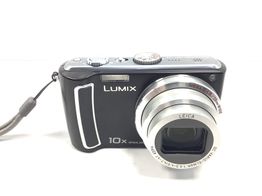
Panasonic Lumix DMC-TZ5: Una compacta travel zoom con buen estado general
Analizamos una unidad concreta de la Panasonic Lumix DMC-TZ5 que ha pasado por nuestro taller. Una compacta travel zoom de 2008 que, con 9,1 megapíxeles y un objetivo Leica 10x, sigue siendo una opción funcional para quien busca una cámara sencilla y ligera.