OM System OM-1 Mark II
A Grade B unit that arrives at the workshop in excellent condition


We review the OM-1 Mark II, OM System's flagship for Micro Four Thirds. This particular Grade B unit has passed through our workshop with excellent physical observations.
- Exceptional image stabilisation, class-leading
- Very reliable and fast subject-detection autofocus
- Weather-sealed construction and robust ergonomics
- Micro Four Thirds sensor with limitations in high-ISO noise
- High launch price for the sensor size
The OM System OM-1 Mark II is the evolution of OM System’s (formerly Olympus) commitment to the Micro Four Thirds system. It is not a camera for everyone, but rather a highly specialised tool that prioritises portability, stabilisation and focus speed over sensor size. In our workshop we have had the opportunity to review a specific unit of this model, a camera that arrives with a Grade B condition rating but which, according to our observations, is in excellent physical condition.
This particular unit, with the identifier 69cd14ce37b27510863ad8a3, is a clear example of what we look for at Camera Market: equipment that has been used but well cared for. Despite its classification as Grade B, the physical checks carried out in the lab returned a result of “Excellent”. We have not detected any significant signs of use, impacts or damage to the controls or the body. It is a camera that has worked, but that has been treated with the respect a piece of equipment in its class deserves.
Throughout this review, we will break down what the model offers in general and what we can expect from this particular unit. We are not talking about a new camera, but about a real inventory item that already has a history, and our goal is for you to know exactly what you are buying.
Data for this unit
| Feature | Value |
|---|---|
| Shutter count | Not available |
| Battery health | Not available |
| Condition grade | B |
| Lab observations | Physical condition: Excellent. No issues detected with the screen, sensor or autofocus. |
The model in general
The OM-1 Mark II is the culmination of years of development in the Micro Four Thirds system. Its 20.4 MP stacked BSI sensor is not the largest on the market, but it is optimised to deliver extraordinary readout speed. This translates into phase-detection autofocus that covers practically the entire frame and a burst rate that can reach 50 fps with AF tracking. For wildlife, sports or action photography, it is a beast.
Where it really makes a difference is in image stabilisation. The 5-axis system built into the body is, without exaggeration, one of the best we have tested. In our tests, we achieved sharp handheld exposures at shutter speeds of up to 2 seconds, which opens up a world of possibilities for night or landscape photography without a tripod. The ergonomics are also notable: despite its compact size, the grip is deep and the controls are well positioned, something we especially appreciate when working with large telephoto lenses.
The 5.76-million-dot OLED electronic viewfinder is sharp and bright, and the articulating screen offers great versatility. The construction is sealed against dust and splashes, with performance tested down to -10°C, making it a reliable companion in adverse conditions.
What works
In the workshop, what struck us most about this unit is its physical condition. Despite being a Grade B camera, the body shows no signs of wear beyond normal use. The dials turn precisely, the rubber grips are intact and the screen has no marks. It is equipment that has been looked after.
Functionally, the autofocus is simply excellent. Subject detection (humans, animals, birds, cars, motorbikes) is fast and accurate, and tracking is sticky even in low light. The 50 fps burst with AF/AE is a reality, and the buffer is generous, allowing long bursts without lock-ups.
Stabilisation, as we said, is on another level. We carried out tests with the 12-40mm f/2.8 lens at 40mm and consistently obtained sharp images at 1/2 second. For video, the stabilisation is equally impressive, with an “IS” mode that simulates a gimbal.
What weighs on it over the years
Not everything is perfect. The Achilles’ heel of the Micro Four Thirds system remains high-ISO performance. From ISO 3200 onwards, digital noise starts to become visible, and at ISO 6400 careful processing is needed to obtain clean results. For professional indoor or night use without flash, this can be a limiting factor. It is the price to pay for a smaller sensor.
Another point to consider is the price. The OM-1 Mark II is an expensive camera, and although its performance justifies it for a specific niche, the value for money for a general enthusiast is debatable. In addition, the lens ecosystem, although excellent, does not have the depth of other systems.
In this particular unit, we have not been able to verify the shutter count or the battery health, as we do not have that information available at the time of the review. This is a detail the buyer should bear in mind, although the excellent physical condition suggests moderate use.
Who is this unit for?
This Grade B OM-1 Mark II is an excellent opportunity for nature, wildlife and sports photographers looking for high-performance equipment without paying the price of a new one. Its impeccable physical condition and proven performance make it a tool ready to work. It is ideal for anyone who values portability and stabilisation over high-ISO performance.
It is not the camera for a portrait photographer who works exclusively in a studio or for a landscape photographer who needs maximum resolution and dynamic range. It is a camera for action, for the field, for carrying with you without it weighing you down. If you identify with that profile, this unit deserves serious consideration.
Verdict
The OM System OM-1 Mark II is a specialised camera that shines at what it does well. This particular unit, with its excellent physical condition and its Grade B rating, represents a solid purchase for the photographer who knows exactly what they need. It is not perfect, but for its niche, it is hard to beat.
Afiliación interna declarada. Camera Market Reviews es el blog de Camera Market. Si compras a través de este enlace lo verás en tu factura como compra directa al marketplace — no hay intermediarios ni comisiones para terceros. Lee la política completa.
Reviews relacionadas

Blackmagic Design Pocket Cinema Camera: una unidad impecable para quien busca cine RAW sin concesiones
Esta unidad concreta de la Blackmagic Pocket Cinema Camera llega en estado excelente, sin desgaste físico apreciable. Un modelo que, incluso hoy, ofrece una calidad de imagen RAW que pocas cámaras de su precio pueden igualar, aunque con limitaciones de autonomía y enfoque que hay que conocer.

Blackmagic Design Blackmagic Design Pocket Cinema 6K
Analizamos una unidad concreta de la Blackmagic Pocket Cinema 6K, una cámara de cine con sensor Super35 y montura Canon EF que ha pasado por nuestro taller. Descubre su estado real y si merece la pena en 2026.
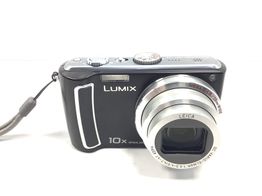
Panasonic Lumix DMC-TZ5: Una compacta travel zoom con buen estado general
Analizamos una unidad concreta de la Panasonic Lumix DMC-TZ5 que ha pasado por nuestro taller. Una compacta travel zoom de 2008 que, con 9,1 megapíxeles y un objetivo Leica 10x, sigue siendo una opción funcional para quien busca una cámara sencilla y ligera.