OM System OM System Om-1
A second-hand OM-1 in excellent condition that performs like new
We analyze a specific unit of the OM System OM-1 that has passed through our workshop. Discover how this model generally performs and what you should expect from this particular camera.
- Excellent sealing and robust build, ideal for outdoors
- Fast and reliable AF with very accurate subject detection
- 7-stop stabilization allows handheld shooting in difficult conditions
- Burst up to 50 fps with continuous AF, no blackout
- Micro 4/3 sensor limits performance in very low light
- Complex menu with many options, requires learning curve
- High launch price, though more reasonable on the second-hand market
The OM System OM-1 arrived on the market in 2022 as the first camera under the new OM System brand, the direct successor to the Olympus OM-D E-M1 Mark III. It is no ordinary camera: it is designed for those who demand the best in nature, sports, and action photography, with a focus on portability, durability, and AF performance that competes with larger format bodies.
Today we have a specific unit in the workshop, identified by internal ID 6a0c1cc58b4ec0a279448697. It arrives with a grade B in our classification, meaning it shows slight signs of use but is in good overall condition. After passing through our verification lab, we can confirm that the physical condition is good and the general condition is excellent. No issues were detected with the screen or the focusing system, and the sensor is clean. At first glance, this unit appears to have had a quiet life.
Data for this unit
| Parameter | Value |
|---|---|
| Shutter count | Not available |
| Battery health | Not available |
| Condition grade | B (good, with slight signs of use) |
| Lab observations | Physical condition: good. General condition: excellent. No issues with screen, AF, or sensor. |
Although we do not have the shutter count or battery health, the visual and functional evaluation in the workshop allows us to state that this unit is in optimal condition for daily use. Grade B is common for cameras that have had moderate but careful use.
The model in general
The OM-1 features a 20.4-megapixel Micro 4/3 sensor with Stacked CMOS technology, giving it a very high readout speed. This translates into a burst rate of up to 50 frames per second with continuous autofocus tracking and no blackout in the electronic viewfinder. The viewfinder, by the way, is one of the best on the market: 5.76 million dots, 120 fps refresh rate, and 0.83x magnification offering a very immersive experience.
The autofocus system is one of the model’s strong points. It incorporates subject detection with artificial intelligence capable of recognizing birds, animals, vehicles, and people. In practice, we have seen that the AF is fast, accurate, and very reliable even in challenging light conditions. Bird-in-flight detection, for example, works exceptionally well, maintaining focus even with very busy backgrounds.
Ergonomics is another success. The body is compact for what it offers, with a deep and well-designed grip that allows you to hold the camera securely even with one hand. The dials and buttons are well placed, although the menu remains complex with many options, something inherited from Olympus. It is not a camera you master in five minutes, but once you get used to it, the customization is almost total.
What works
The sealing is top-notch. The OM-1 is built to withstand harsh conditions: dust, splashes, and sub-zero temperatures. It is a camera you can take out to shoot in rain or dusty environments without worry.
The in-body image stabilization is 7 stops, one of the best on the market. Combined with a stabilized lens, you can shoot at very slow shutter speeds without a tripod. In our workshop, we have verified that with a 12-40 mm f/2.8, it is possible to get sharp images at 1/4 second, something that would be unthinkable in other systems.
The burst rate is another strong point. At 50 fps with continuous AF, it is an ideal camera for sports, moving wildlife, or any situation where you need to capture the exact moment. The buffer is generous and allows you to maintain the burst for several seconds before it fills up.
What weighs with age
The Micro 4/3 sensor remains the main weakness compared to competitors with APS-C or full-frame sensors. In very low light conditions, noise appears earlier and exposure latitude is less. It is not a camera for night photography or low-light interiors without a fast lens.
The menu, as mentioned, is dense and can be overwhelming. Although customization is extensive, finding a specific option can take time. This is not an issue exclusive to this unit, but rather the model in general.
The launch price was high, but it has adjusted on the second-hand market. This specific unit sells for 969 €, a reasonable price for its condition. On the market, the average price over the last 30 days has been 1065 €, with a range from 905 € to 1225 €. There are currently 4 units available, indicating it is not a particularly scarce model.
Who is this unit for?
This OM-1 is for the nature or sports photographer who values portability and durability over sensor size. If you work outdoors, in changing weather conditions, and need a camera that responds quickly and reliably, this unit is an excellent choice.
It is also a good option for someone wanting to enter the Micro 4/3 system with a top-of-the-line body without paying the new price. The grade B should not be a hindrance: the general condition is excellent, and we have detected no functional issues.
However, it is not the best choice for studio photography, low-light portraiture, or high-end professional video. For those uses, a larger sensor and a more advanced video system would be more suitable.
Verdict
The OM System OM-1 remains one of the most complete and capable cameras in the Micro 4/3 system, and this specific unit, with excellent condition and a competitive price, is a highly recommended purchase for anyone seeking a robust, fast, and reliable camera for outdoors. It is not perfect —the sensor has its limitations and the menu is complex— but in its niche, action and nature photography, it performs at a level few cameras of its size can match.
Afiliación interna declarada. Camera Market Reviews es el blog de Camera Market. Si compras a través de este enlace lo verás en tu factura como compra directa al marketplace — no hay intermediarios ni comisiones para terceros. Lee la política completa.
Reviews relacionadas

Blackmagic Design Pocket Cinema Camera: una unidad impecable para quien busca cine RAW sin concesiones
Esta unidad concreta de la Blackmagic Pocket Cinema Camera llega en estado excelente, sin desgaste físico apreciable. Un modelo que, incluso hoy, ofrece una calidad de imagen RAW que pocas cámaras de su precio pueden igualar, aunque con limitaciones de autonomía y enfoque que hay que conocer.

Blackmagic Design Blackmagic Design Pocket Cinema 6K
Analizamos una unidad concreta de la Blackmagic Pocket Cinema 6K, una cámara de cine con sensor Super35 y montura Canon EF que ha pasado por nuestro taller. Descubre su estado real y si merece la pena en 2026.
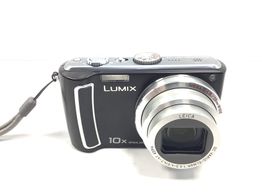
Panasonic Lumix DMC-TZ5: Una compacta travel zoom con buen estado general
Analizamos una unidad concreta de la Panasonic Lumix DMC-TZ5 que ha pasado por nuestro taller. Una compacta travel zoom de 2008 que, con 9,1 megapíxeles y un objetivo Leica 10x, sigue siendo una opción funcional para quien busca una cámara sencilla y ligera.