Panasonic Lumix DC-GX800
A small Micro Four Thirds mirrorless, with a grade B unit in excellent condition
We review a specific unit of the Lumix DC-GX800 that has passed through our workshop. Compact body, Micro Four Thirds sensor and a clear focus on those who prioritise size. This unit arrives in grade B with a like-new appearance.
- Very compact and lightweight body, ideal as a second body or travel camera
- Grade B unit with an impeccable physical appearance according to the workshop
- Restrained price within the market range for entry-level Micro Four Thirds
- No electronic viewfinder: only a tilting screen
- No shutter count or battery health data for this unit
- Limited ergonomics for large lenses or long sessions
The Panasonic Lumix DC-GX800 is one of those cameras Panasonic placed in the entry-level segment of its Micro Four Thirds system with a very clear idea: to offer the smallest possible body without giving up the interchangeable sensor. It’s a mirrorless camera, with an MFT mount, aimed at those who want something more serious than a phone or a compact, but without carrying the bulk of a DSLR. In Panasonic’s catalogue it sits below the higher-end GX models, and that shows both in performance and in its philosophy of use.
Today we have on the table a specific unit from our inventory, with internal identifier 6a0ae87d8006163fedb4f0c4. We’re not talking about the model in the abstract: we’re talking about this camera, the one in the photos, with its real condition and its particularities. And it’s worth saying from the outset: this is a unit classified as grade B, but whose workshop report describes the physical condition as “like new” and the overall condition as “excellent”. In other words, the commercial label is conservative compared to what you actually see.
This review isn’t intended to sell the camera. It’s intended to tell you what this model is, what we’ve verified on this specific unit and for whom it makes sense to pay for it. If you’re looking for a small camera, with a mount that has a huge catalogue behind it and at a restrained entry price, keep reading. If you’re looking for a viewfinder, serious burst shooting or advanced video, this probably isn’t your camera.
Data for this unit
| Data | Value |
|---|---|
| Shutter count | Not available |
| Battery health | Not available |
| Condition grade | B |
| Lab observations | Physical condition “like new”, condition “excellent” |
| Accessories included | Not specified in the report |
| Price of this unit | €279 |
| Market range (30 days) | €237 – €321 |
| Units available | 1 |
There are two gaps worth pointing out plainly: we don’t have a shutter count or a battery health reading for this unit. We’re not going to make them up. What we do have is the workshop’s physical assessment, which is favourable, and the price, which sits right at the market average for the last 30 days. That means we’re not looking at a bargain or an overprice: we’re looking at a unit at market price with a physical condition above what its grade suggests.
The model in general
The GX800 has a Micro Four Thirds sensor, the format Panasonic shares with Olympus (now OM System) and with a long list of lens manufacturers. That is, probably, its biggest long-term argument: the MFT mount has an enormous catalogue of lenses, both native and third-party, and many of them are small and cheap. For a camera of this size, that fits perfectly.
Panasonic’s autofocus in this generation is based on contrast detection, with face recognition and tracking modes. It’s not a phase-detection AF, and that shows in fast-moving situations or in low light. For relaxed portraiture, street or travel, it does the job. For sport or demanding action, it falls short. It’s a model of its time and its range, and it’s worth accepting that.
In terms of ergonomics, the GX800 is what it is: a very compact body, with a minimal grip and a tilting screen that doubles as a viewfinder. There’s no electronic viewfinder. For many people, that’s a real point of friction, especially in broad daylight. The screen washes out in the sun and framing becomes awkward. It’s a conscious compromise by Panasonic to reduce size and cost, but it’s a compromise the buyer must accept.
For video, the GX800 records at resolutions typical of its range, with known limitations in terms of stabilisation and cropping. It’s not a professional video camera, but for home clips or social media content it does the job without fuss. The lack of in-body stabilisation means relying on stabilised lenses or a steady hand.
What works
The first thing that works is the size. It’s a camera you can carry in a coat pocket with a pancake lens, and that completely changes how often you take it out. In our workshop we’ve seen many large cameras stay at home; this one doesn’t.
The second is the ecosystem. Being Micro Four Thirds, any MFT lens you have or find second-hand will work. That greatly reduces the total cost of the system in the medium term.
And the third, in the case of this specific unit, is the physical condition. The lab report describes the appearance as “like new” and the condition as “excellent”. For a grade B camera, that’s a good sign: it probably has minimal or no visible marks, and the grade responds more to commercial criteria than to actual wear.
What weighs on it over the years
The lack of an electronic viewfinder is the most cited weak point of this model, and rightly so. In direct sunlight, the tilting screen isn’t enough. It’s a design issue, not an issue with this unit.
The contrast-detection AF has also aged. Compared to today’s mirrorless cameras with phase detection and artificial intelligence, the GX800 feels slow in tracking. For relaxed photography it doesn’t matter; for anything moving fast, it does.
And then there’s the ergonomics. The body is so small that large lenses unbalance it. It’s not a camera for mounting a fast telephoto and shooting for an hour straight. It’s a camera for carrying light and shooting little by little.
On top of this, on this unit we don’t have shutter or battery data. It’s not a defect of the camera, but it is an uncertainty the buyer must weigh up. On a second-hand camera, that data helps estimate remaining service life. Here we don’t have it.
Who is this unit for?
This specific unit is for anyone looking for a small camera, with a mount that has depth and at market price. It fits well as a second body for someone who already has MFT lenses, as a travel camera for those who prioritise size over performance, or as a first mirrorless for those coming from a compact who want something with interchangeable lenses without spending much.
It’s not for anyone who needs a viewfinder, who shoots sport or action, or who wants to record video with stabilisation. Nor for anyone who wants certainty about internal wear: without a shutter count or battery health, there’s a margin of uncertainty worth accepting.
Verdict
The Lumix DC-GX800 is a small, honest mirrorless camera with an enormous ecosystem behind it. This specific unit arrives in grade B but with an impeccable physical appearance according to the workshop, at a price in line with the market. It’s a sensible buy if you value size and mount above viewfinder and modern AF. If you need those two things, look at another camera.
Afiliación interna declarada. Camera Market Reviews es el blog de Camera Market. Si compras a través de este enlace lo verás en tu factura como compra directa al marketplace — no hay intermediarios ni comisiones para terceros. Lee la política completa.
Reviews relacionadas

Blackmagic Design Pocket Cinema Camera: una unidad impecable para quien busca cine RAW sin concesiones
Esta unidad concreta de la Blackmagic Pocket Cinema Camera llega en estado excelente, sin desgaste físico apreciable. Un modelo que, incluso hoy, ofrece una calidad de imagen RAW que pocas cámaras de su precio pueden igualar, aunque con limitaciones de autonomía y enfoque que hay que conocer.

Blackmagic Design Blackmagic Design Pocket Cinema 6K
Analizamos una unidad concreta de la Blackmagic Pocket Cinema 6K, una cámara de cine con sensor Super35 y montura Canon EF que ha pasado por nuestro taller. Descubre su estado real y si merece la pena en 2026.
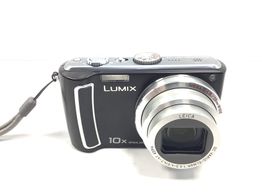
Panasonic Lumix DMC-TZ5: Una compacta travel zoom con buen estado general
Analizamos una unidad concreta de la Panasonic Lumix DMC-TZ5 que ha pasado por nuestro taller. Una compacta travel zoom de 2008 que, con 9,1 megapíxeles y un objetivo Leica 10x, sigue siendo una opción funcional para quien busca una cámara sencilla y ligera.