Panasonic Lumix DMC-G70
A Micro Four Thirds mirrorless that still delivers without fuss, in impeccable condition
We review a specific Panasonic Lumix DMC-G70 unit in grade B with excellent physical condition. A camera that proves age isn't everything when it's been properly cared for.
- Excellent physical condition for a second-hand unit
- Very competitive €199 price for what it offers
- Compact and lightweight ergonomics, ideal for travel
- Micro Four Thirds sensor with solid overall performance
- No in-body stabilisation (relies on the lens)
- Contrast-detect AF, not up to par with newer models
- No dust or moisture sealing
The Panasonic Lumix DMC-G70 is one of those cameras that slipped under the radar when it launched, but over time has carved out its niche in the second-hand market. It’s a Micro Four Thirds mirrorless that arrived as a minor update to the G6, with a 16-megapixel sensor and contrast-detect autofocus that, in its day, was among the best the brand had to offer. Today, in 2026, it remains a sensible option for anyone after a lightweight camera with good ergonomics and no pretensions.
The unit we have in the workshop today is reference 6a0ac94e8006163fedb4ee6e, a G70 in grade B that arrived in a physical state that pleasantly surprised us. The lab has rated it as “excellent” in terms of physical integrity, meaning there are no dents, scratches or obvious signs of heavy use. It’s one of those units that proves how much of a difference the previous owner’s care makes. The camera is available in our inventory for €199, a price that sits fairly close to the market average for this model in this condition.
Details of this unit
| Feature | Value |
|---|---|
| Shutter count | Not available |
| Battery health | Not available |
| Condition grade | B |
| Lab notes | Excellent physical condition, no issues detected on the body |
The lack of data on shutter count and battery health is common in units that haven’t undergone a full inspection of those components. That said, the fact that the lab hasn’t detected any significant physical issues is a good sign. On cameras of this generation, the shutter typically holds up well beyond 100,000 actuations, so the risk is low, but it’s worth keeping in mind.
The model in general
The G70 is built around a 16-megapixel Live MOS sensor in Micro Four Thirds format, a size that still makes sense today for the balance between image quality and overall kit size. In good light, performance is more than acceptable, with natural colours and decent dynamic range for its era. Where the age shows is in low-light situations: from ISO 1600 upwards, noise becomes visible, and beyond 3200 it’s best avoided unless you’re after a grainy look.
The autofocus system uses contrast detection with 49 points. It was snappy in its day, and in good light it still is, but in low-contrast scenes or with fast-moving subjects it falls short. This isn’t a camera for sports or action photography; it’s a camera for relaxed shooting, travel, portraits or street. Continuous shooting reaches 7 fps with focus locked, dropping to around 4 fps with tracking — enough for occasional use.
Ergonomics are one of its strong points. The body is compact, with a pronounced grip that lets you hold it securely even with slightly larger lenses. The top dials — one for shooting mode and one for exposure compensation — are a thoughtful touch that many modern models have dropped in favour of touch menus. The 3-inch tilting touchscreen is still useful today, especially for video or awkward angles.
What works
The value for money is, without a doubt, the standout feature. For €199, this unit offers a body in excellent condition that, paired with a fast prime like a 25mm f/1.7 or a 20mm f/1.7, can produce very respectable images. The Micro Four Thirds system has a huge lens catalogue with very competitive second-hand prices, which multiplies the possibilities without breaking the bank.
4K video recording at 30 fps — one of the first cameras in its segment to offer it — remains a point in its favour. Quality is good for the era, and the sensor crop in 4K mode is manageable. Touch-to-focus while recording works well, and the lack of a recording time limit in 4K is a detail many users appreciate.
The battery, although we have no health data for this specific unit, generally delivers around 350–400 shots per charge — a modest but acceptable figure. That said, we’d recommend carrying a spare for long days out.
What weighs it down over time
The weakest point of this camera, and of the entire Panasonic generation from that era, is the lack of in-body stabilisation. It relies entirely on lens stabilisation, which limits your options if you use unstabilised optics or adapters from other systems. With stabilised lenses — like Panasonic’s standard kit zooms — the result is acceptable, but it doesn’t compare to the 5-axis stabilisation systems that came later.
Contrast-detect autofocus, as we’ve already mentioned, is another limitation that becomes more noticeable over time. In low light or with moving subjects, the camera can “hunt” and lose focus. This isn’t a problem specific to this unit, but rather a design trait of the era, and it’s something to accept if you go for this camera.
The build is polycarbonate, with no dust or moisture sealing. This isn’t a camera for harsh conditions; it needs to be handled with care. In this particular unit, the physical condition is excellent, but it’s worth remembering that this isn’t a rugged body designed for heavy-duty use.
Who is this unit for?
This particular G70, with its excellent physical condition and €199 price tag, is a very appealing option for anyone getting started in mirrorless photography who wants a light, affordable kit. It also works well as a second camera for those who already own Micro Four Thirds lenses and want a backup or travel body without spending too much.
We wouldn’t recommend it to anyone who needs fast, reliable autofocus for action, nor to those who regularly work in challenging light conditions. It’s also not for anyone who considers in-body stabilisation an essential feature. For those cases, there are more modern options — albeit at a higher price.
Verdict
The Panasonic Lumix DMC-G70 isn’t a camera that’s going to surprise anyone in 2026, but this particular unit proves that proper care can extend a camera’s useful life beyond expectations. At €199, with excellent physical condition and solid overall performance, it’s a sensible purchase for anyone after an affordable mirrorless without compromising on image quality. It’s not the best camera in its category, but it’s one of the best value-for-money options on the second-hand market today.
Afiliación interna declarada. Camera Market Reviews es el blog de Camera Market. Si compras a través de este enlace lo verás en tu factura como compra directa al marketplace — no hay intermediarios ni comisiones para terceros. Lee la política completa.
Reviews relacionadas

Blackmagic Design Pocket Cinema Camera: una unidad impecable para quien busca cine RAW sin concesiones
Esta unidad concreta de la Blackmagic Pocket Cinema Camera llega en estado excelente, sin desgaste físico apreciable. Un modelo que, incluso hoy, ofrece una calidad de imagen RAW que pocas cámaras de su precio pueden igualar, aunque con limitaciones de autonomía y enfoque que hay que conocer.

Blackmagic Design Blackmagic Design Pocket Cinema 6K
Analizamos una unidad concreta de la Blackmagic Pocket Cinema 6K, una cámara de cine con sensor Super35 y montura Canon EF que ha pasado por nuestro taller. Descubre su estado real y si merece la pena en 2026.
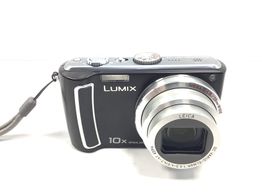
Panasonic Lumix DMC-TZ5: Una compacta travel zoom con buen estado general
Analizamos una unidad concreta de la Panasonic Lumix DMC-TZ5 que ha pasado por nuestro taller. Una compacta travel zoom de 2008 que, con 9,1 megapíxeles y un objetivo Leica 10x, sigue siendo una opción funcional para quien busca una cámara sencilla y ligera.