Panasonic Lumix DMC-LX100
The serious compact that still justifies its reputation, with caveats


We review a specific Lumix LX100 unit that has passed through our workshop. Excellent condition, grade B, and a price that should be put in context against the current market.
- Micro Four Thirds sensor in a compact body with a fast fixed lens
- Physical manual controls: aperture, shutter speed and compensation on dedicated dials
- Excellent physical condition on this specific unit
- No tilting or touchscreen, somewhat limiting these days
- The electronic viewfinder, though useful, is not up to current standards
The Lumix LX100 is one of those models that Panasonic placed in an awkward segment and that, nevertheless, has aged better than many expected. It is neither a conventional pocket compact nor a mirrorless with interchangeable lenses: it is a hybrid that bets on putting a Micro Four Thirds sensor into a contained body and topping it off with a fast fixed lens. An approach that at the time was almost a statement of intent and that still has its defenders today.
The unit we have had in the workshop arrives with grade B and a physical condition that our lab has rated as excellent. That is, we are not looking at a camera with obvious signs of mistreatment or worrying structural wear, but at a used unit that has been looked after sensibly. The sale price of this specific unit is 569 euros, a figure worth viewing with perspective because the market moves.
Over the last thirty days, the average price of the LX100 on the second-hand market has stood at 515 euros, and there are currently four units available in circulation. That means this unit is above average, which makes sense if the physical condition is as good as the report indicates, but the buyer should weigh it up. It is not a bargain; it is a well-preserved unit at a well-preserved unit’s price.
Data for this unit
| Data | Value |
|---|---|
| Shutter count | Not available |
| Battery health | Not available |
| Condition grade | B |
| Lab observations | Physical condition: excellent. Overall condition: excellent. |
| Accessories included | Not specified |
It is worth being transparent about what we do not know: we have no shutter count or battery health data for this unit. What we do have is the workshop’s physical assessment, which places it in excellent condition. For a camera of this type, with an electronic and mechanical shutter, physical wear tends to be more indicative than the number of actuations, but it is a detail the interested buyer should check before closing the deal.
The model in general
The LX100 houses a 12.8-megapixel effective Micro Four Thirds sensor that, mind you, does not use the entire sensor surface: Panasonic crops to maintain the multi-aspect format, a design decision that allows shooting in 4:3, 3:2 and 16:9 without dramatically losing angle of view. It is a detail that was highly valued at the time and that remains useful for anyone working with different formats without wanting to reframe.
The lens is one of the big arguments: a 24-75 mm equivalent with an f/1.7-2.8 aperture. That f/1.7 at the wide end is what allows the LX100 to hold its own indoors and in low-light conditions without resorting to high ISOs. The zoom is short, let’s not kid ourselves, but the speed compensates in many scenarios.
The autofocus system is contrast-based, with face detection and tracking. In good conditions it responds nimbly; in low light or with fast-moving subjects, it is not at the level of current hybrid systems. It is a functional AF, not a reference AF. Ergonomics, on the other hand, are one of its strengths: physical dials for aperture, shutter speed and exposure compensation, plus a focus ring and a zoom ring. For anyone coming from traditional photography, the camera feels immediate.
What works
The lens-sensor package is the heart of the LX100 and it still works. The combination of a Micro Four Thirds sensor with a fast fixed lens results in image quality that, at base and medium ISO, is above what its size suggests. Dynamic range is reasonable and Panasonic’s colour, with its usual profiles, remains pleasant without being neutral.
The manual controls are another point in its favour. Having the aperture on a dial with physical markings, the shutter speed on another and compensation on a third changes the way you work. It is not a camera to leave in auto and shoot without thinking; it is a camera that invites you to decide. And that, for a specific segment of users, is worth more than any specification.
The electronic viewfinder, though not the best on the market, does the job. Having a viewfinder on a compact of this size was unusual when it launched and it remains a differentiator against options without one.
What weighs on it over the years
There are two points that the passage of time has laid bare. The first is the screen: fixed, with no tilt and no touch. In 2026, that limits use at awkward angles and in video, and forces you to resort to the viewfinder in situations where an articulated screen would be more comfortable. It is not a manufacturing defect, it is a design decision that was accepted at the time and that is noticeable today.
The second is the viewfinder. It is a panel that does the job for framing, but whose resolution and behaviour in changing light conditions are not up to what is expected today. Anyone coming from a recent camera will notice. Anyone coming from a compact without a viewfinder will appreciate it all the same.
Add to that the contrast-based autofocus, which is not especially fast when tracking moving subjects. For unhurried portraits, street and landscape, it is fine. For sport or wildlife, it is not the tool.
Who is this unit for?
This specific LX100, in grade B and excellent physical condition, makes sense for anyone looking for a compact with a fast lens, manual controls and a viewfinder, and who does not want to pay the premium of a flawless unit. The fact that we have no shutter count or battery health invites questions before buying, but the workshop’s physical assessment is a solid starting point.
It is not for anyone who needs a tilting screen, latest-generation AF or video with current capabilities. It is for anyone who values the photographic process, the speed of the lens and a body you carry without thinking about it.
Verdict
The LX100 remains a camera with personality and arguments, and this specific unit is in a condition that justifies considering it. The price of 569 euros is above the market average of the last thirty days (515 euros), so the decision comes down to weighing whether the excellent physical condition compensates for that difference. With four units available, the buyer has room to compare. Our reading: a solid unit, a model with known caveats, and a price that invites negotiation or a well-justified purchase.
Afiliación interna declarada. Camera Market Reviews es el blog de Camera Market. Si compras a través de este enlace lo verás en tu factura como compra directa al marketplace — no hay intermediarios ni comisiones para terceros. Lee la política completa.
Reviews relacionadas

Blackmagic Design Pocket Cinema Camera: una unidad impecable para quien busca cine RAW sin concesiones
Esta unidad concreta de la Blackmagic Pocket Cinema Camera llega en estado excelente, sin desgaste físico apreciable. Un modelo que, incluso hoy, ofrece una calidad de imagen RAW que pocas cámaras de su precio pueden igualar, aunque con limitaciones de autonomía y enfoque que hay que conocer.

Blackmagic Design Blackmagic Design Pocket Cinema 6K
Analizamos una unidad concreta de la Blackmagic Pocket Cinema 6K, una cámara de cine con sensor Super35 y montura Canon EF que ha pasado por nuestro taller. Descubre su estado real y si merece la pena en 2026.
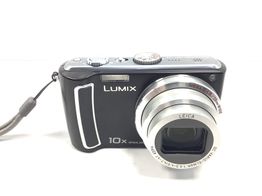
Panasonic Lumix DMC-TZ5: Una compacta travel zoom con buen estado general
Analizamos una unidad concreta de la Panasonic Lumix DMC-TZ5 que ha pasado por nuestro taller. Una compacta travel zoom de 2008 que, con 9,1 megapíxeles y un objetivo Leica 10x, sigue siendo una opción funcional para quien busca una cámara sencilla y ligera.