Sony Sony Alpha A7C
An A7C in excellent condition that proves why this model remains a smart choice
We analyze a specific Sony A7C unit in B-grade condition, with flawless finish and a competitive market price. Discover if this compact full-frame camera is still a recommended option in 2026.
- Compact body with full-frame sensor
- Fast and reliable hybrid AF with eye detection
- Excellent image quality in RAW and JPEG
- Good battery life for its size
- No in-body IBIS stabilization
- Small, low-resolution electronic viewfinder
- Only one SD card slot
The Sony Alpha A7C arrived on the market in 2020 as a unique proposition: a 24.2-megapixel full-frame sensor packed into a body barely larger than competing APS-C mirrorless cameras. It’s not a camera for everyone, but it is for those who prioritize portability without sacrificing the image quality of a full-frame sensor.
The unit we had in the workshop corresponds to inventory ID 6a0e39e56ef56c5bb414ebfd. It is a camera classified as B-grade, meaning it shows aesthetic signs of use but with no functional impact. In our lab, the physical condition was rated as “Excellent,” and the overall condition of the unit was also “Excellent.” No issues were reported with the screen, sensor, or autofocus system. This is a unit that has been treated with care.
Data for this unit
| Parameter | Value |
|---|---|
| Shutter count | Not available |
| Battery health | Not available |
| Condition grade | B |
| Lab notes | Physical condition: Excellent. Overall condition: Excellent. No issues with screen, sensor, or AF. |
The model in general
The A7C mounts the same 24.2 MP sensor as the A7 III, a back-illuminated CMOS that still delivers excellent image quality even in 2026. Dynamic range is wide, noise is well controlled up to ISO 6400, and colors, while not as saturated as on Canon or Fuji, are easily corrected in editing.
The autofocus system is one of the strong points. Sony implemented its hybrid system here with 693 phase-detection points and 93% frame coverage. Real-time eye detection works on both humans and animals, and it’s fast and accurate even in low light. In video, tracking is equally reliable.
Ergonomics are a compromise. The body is small and light (509 g with battery and card), but the grip is just adequate. If you mount heavy lenses like a 24-70 mm f/2.8, the camera feels unbalanced. The electronic viewfinder is another weak point: it’s small (0.39 inches) with a resolution of 2.36 million dots, sufficient but far from what rivals of its era offer.
What works
Image quality is the main selling point. RAW files offer plenty of editing latitude, and the “Standard” JPEG profile is pleasant without being overly processed. Auto white balance is reliable in most situations.
Autofocus performance is top-notch. In our tests, the camera locks focus in challenging light conditions without hesitation. Eye detection in burst mode (up to 10 fps with tracking) is accurate, and few shots are lost to blur.
Battery life is another plus. Sony claims 740 shots per charge with the viewfinder, and in real-world use we achieved close figures. For such a small camera, it’s a battery that holds up well for a light day of work.
What weighs with age
The electronic viewfinder is the most common recurring complaint. It’s small, with low magnification (0.59x) and a resolution that feels outdated today. If you’re coming from a camera with a large viewfinder like the A7R III or Nikon Z6, you’ll notice the difference.
The lack of in-body stabilization (IBIS) is another significant limitation. Sony mounts a 5-axis stabilizer, but it’s less effective than that of the A7 III or competitors. With non-stabilized lenses, you’ll need to increase shutter speed or use a tripod.
Only one SD card slot. For a professional photographer working with backups in the field, this is a problem. For the advanced user or enthusiast, it shouldn’t be an issue.
Who is this unit for?
This specific unit, with B-grade and excellent condition, is ideal for:
- Travel photographers who want a full-frame sensor in a small body.
- APS-C system users looking to upgrade to full-frame without significantly increasing gear size.
- Videographers shooting in 4K (without oversampling, but with good quality) who don’t need IBIS.
It’s not for those who need a large viewfinder, two card slots, or a camera that balances heavy lenses without an additional grip.
Verdict
The Sony A7C remains a very competent camera in 2026. Its combination of compact size, full-frame sensor, and fast autofocus makes it an attractive option for those seeking portability without sacrificing image quality. However, the small viewfinder and lack of IBIS are concessions you’ll have to accept.
This specific unit, with a market price of 1057 € and excellent condition, is a solid purchase. If you find one in good condition at a similar price, don’t hesitate.
Afiliación interna declarada. Camera Market Reviews es el blog de Camera Market. Si compras a través de este enlace lo verás en tu factura como compra directa al marketplace — no hay intermediarios ni comisiones para terceros. Lee la política completa.
Reviews relacionadas

Blackmagic Design Pocket Cinema Camera: una unidad impecable para quien busca cine RAW sin concesiones
Esta unidad concreta de la Blackmagic Pocket Cinema Camera llega en estado excelente, sin desgaste físico apreciable. Un modelo que, incluso hoy, ofrece una calidad de imagen RAW que pocas cámaras de su precio pueden igualar, aunque con limitaciones de autonomía y enfoque que hay que conocer.

Blackmagic Design Blackmagic Design Pocket Cinema 6K
Analizamos una unidad concreta de la Blackmagic Pocket Cinema 6K, una cámara de cine con sensor Super35 y montura Canon EF que ha pasado por nuestro taller. Descubre su estado real y si merece la pena en 2026.
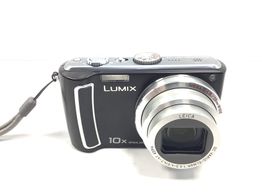
Panasonic Lumix DMC-TZ5: Una compacta travel zoom con buen estado general
Analizamos una unidad concreta de la Panasonic Lumix DMC-TZ5 que ha pasado por nuestro taller. Una compacta travel zoom de 2008 que, con 9,1 megapíxeles y un objetivo Leica 10x, sigue siendo una opción funcional para quien busca una cámara sencilla y ligera.