Sony Cyber-Shot RX100 VII
A pocket compact with high-end AF, in excellent condition


We review a specific unit of the RX100 VII that has passed through our workshop: excellent physical condition, no accessories, and priced below the market average. The ultimate travel and street compact, with its highlights and its drawbacks.
- AF with eye detection and real-time tracking, inherited from the Alpha series
- Zeiss 24-200 mm f/2.8-4.5 lens in a body that fits in a pocket
- 20 fps burst without blackout with electronic shutter
- Excellent physical condition on this specific unit
- No first-generation stabilisation: IBIS doesn't exist, the optics compensate but don't work miracles
- Battery is tight for long sessions; a spare is advisable
- High price for a 1-inch compact, even used
- No 3.5 mm microphone connector (multi-interface shoe only)
The Sony Cyber-Shot RX100 VII has been the benchmark among 1-inch sensor compacts since its launch. It’s not a perfect camera, but it has achieved something few manage: remaining relevant years after its release. In a market where smartphones have devoured compacts, the RX100 VII endures because it offers something no phone can match: a Zeiss 24-200 mm equivalent lens with f/2.8-4.5 aperture, real-time eye-detection AF, and a 20 fps burst without blackout, all in a body weighing just 300 grams.
Today we have a specific unit in the workshop, the one matching internal identifier 69a33243bc0862482c1c9452. It arrived at our verification bench with a physical condition rated as excellent by the lab, meaning no significant scratches, dents, or abnormal wear on the controls. This is a unit that has been looked after, and it shows. But before diving into details, let’s lay out the objective data for this unit.
Data for this unit
| Metric | Value |
|---|---|
| Shutter count | Not available |
| Battery health | Not available |
| Condition grade | B (Excellent) |
| Lab notes | Physical condition: Excellent. No screen, AF, or video issues detected. No accessories included. |
The unit arrives without accessories, which is common for this type of compact when sold used. No additional lens cap, no strap, no spare battery. The B grade is consistent with what we’ve seen: a camera that has been used but treated with care. There are no obvious signs of wear on the body, and the lens — the most delicate point on any compact — shows no signs of fungus, scratches, or haze.
The model in general
The RX100 VII is the seventh iteration of a line that Sony has refined with each generation. The sensor is a stacked 20.1-megapixel 1-inch CMOS, the same type found in the RX10 series and some of the ZV range cameras. It’s not a large sensor compared to APS-C or full frame, but the magic lies in the processor and the lens.
The Zeiss Vario-Sonnar T* 24-200 mm f/2.8-4.5 lens is this camera’s biggest asset. In a body that fits in a jacket pocket, you get a focal range covering from moderate wide-angle to medium telephoto. It’s a versatile lens, sharp in the centre even wide open, with very competent distortion correction. It’s not a portrait lens with creamy bokeh — the 1-inch sensor limits depth-of-field control — but for travel, street, or reportage photography, it’s an exceptional tool.
The AF is undoubtedly the camera’s strongest point. Sony has brought the RX100 VII the 357-point phase-detection system found in some of its high-end mirrorless cameras. Eye detection works on both humans and animals, and real-time tracking is sticky. In our workshop, we tested the AF in medium light conditions, and the camera holds focus without hesitation. It’s not an action camera — the buffer fills up quickly when shooting RAW — but for moderately moving subjects, it’s more than enough.
What works
Portability is the first selling point. At 300 grams and a body just over 10 cm wide, the RX100 VII is a camera you can carry with you at all times without excuses. And in photography, that matters more than it seems. The camera you have on you is the one you use, and this camera is designed to always be in your pocket.
The 20 fps burst with blackout-free electronic shutter is another major asset. It’s a figure that rivals much larger and more expensive cameras, and it lets you capture moments that would be impossible with a conventional compact. The electronic shutter also eliminates mechanical noise, something you’ll appreciate in quiet situations or street photography.
Video is another strong point: it records 4K without crop and with S-Log2 and HLG colour profiles. It lacks a 3.5 mm microphone connector, but the multi-interface shoe allows compatible microphones without adapters. For content creators looking for a small camera for video, it’s a very serious option.
What weighs with age
Not everything is praise. The RX100 VII has weak points that become more evident over time. The first is the battery: the NP-BX1 is a unit of just 4.4 Wh, and the camera is demanding on it. In a heavy-use session, running out of battery before 300 shots is not unusual. It’s a known issue across the entire RX100 series, and it’s not something Sony has fixed in this generation.
The second is the lack of sensor-shift stabilisation. Sony compensates with the lens’s optical stabilisation, which works well for stills, but in video, the absence of IBIS is noticeable. If you shoot while walking, you’ll see a certain sway that you wouldn’t find on a camera with sensor-shift stabilisation. It’s not a flaw exclusive to this camera — 1-inch compacts rarely mount IBIS — but it’s something to consider if video is your priority.
The third is the price. Even used, the RX100 VII stays in a high bracket. The unit we have today is priced at €864, with a 30-day average market price of €927. It’s a considerable investment for a compact camera, and you need to be aware that, for that money, you could buy a mirrorless camera with an APS-C sensor and a basic lens. The RX100 VII is justified if you value extreme portability and the focal range without changing lenses.
Who is this unit for?
This specific unit, with its excellent physical condition and no accessories, is aimed at a very clear profile: the photographer who wants a quality camera to carry at all times, without giving up high-end performance. If you’re the type who leaves the camera at home because it’s heavy or because you don’t want to carry a bag, the RX100 VII is the answer.
It’s also an interesting option for travellers who want a versatile focal range without changing lenses, and for content creators who need a small camera for 4K video. That said, if your priority is action or sports photography, this camera falls short due to the buffer and sensor size. For that, a mirrorless camera with a larger sensor is better.
Verdict
The Sony Cyber-Shot RX100 VII remains, to this day, the most capable pocket compact on the market. This specific unit is in excellent physical condition, with no significant signs of use, and at a price (€864) slightly below the market average (€927). It’s a recommended purchase if you know what you’re looking for: a small camera with a versatile lens and high-end AF that you can carry with you at all times. It’s not perfect — the battery and lack of IBIS are its weak points — but as a travel and street photography tool, it’s hard to find anything better.
Afiliación interna declarada. Camera Market Reviews es el blog de Camera Market. Si compras a través de este enlace lo verás en tu factura como compra directa al marketplace — no hay intermediarios ni comisiones para terceros. Lee la política completa.
Reviews relacionadas

Blackmagic Design Pocket Cinema Camera: una unidad impecable para quien busca cine RAW sin concesiones
Esta unidad concreta de la Blackmagic Pocket Cinema Camera llega en estado excelente, sin desgaste físico apreciable. Un modelo que, incluso hoy, ofrece una calidad de imagen RAW que pocas cámaras de su precio pueden igualar, aunque con limitaciones de autonomía y enfoque que hay que conocer.

Blackmagic Design Blackmagic Design Pocket Cinema 6K
Analizamos una unidad concreta de la Blackmagic Pocket Cinema 6K, una cámara de cine con sensor Super35 y montura Canon EF que ha pasado por nuestro taller. Descubre su estado real y si merece la pena en 2026.
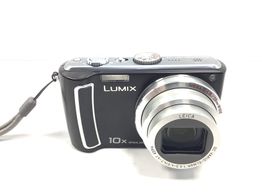
Panasonic Lumix DMC-TZ5: Una compacta travel zoom con buen estado general
Analizamos una unidad concreta de la Panasonic Lumix DMC-TZ5 que ha pasado por nuestro taller. Una compacta travel zoom de 2008 que, con 9,1 megapíxeles y un objetivo Leica 10x, sigue siendo una opción funcional para quien busca una cámara sencilla y ligera.